


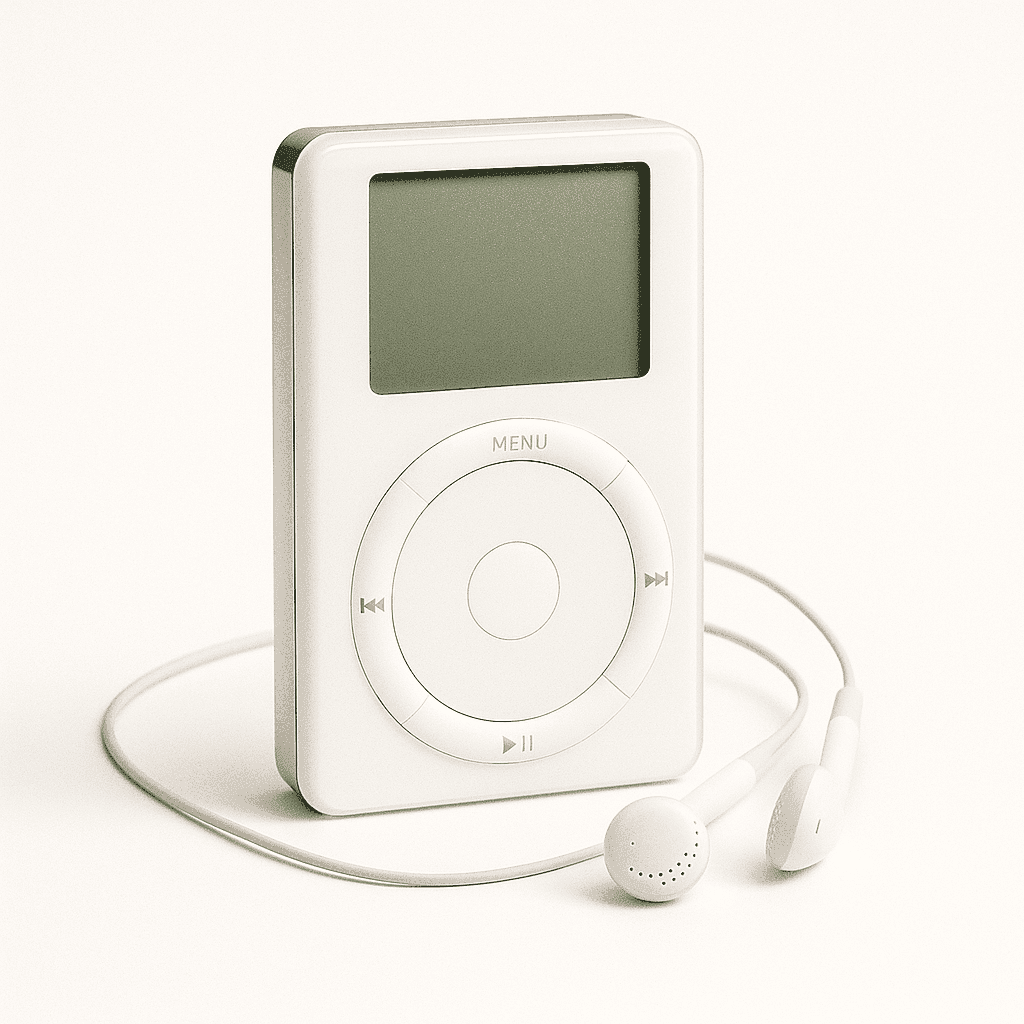
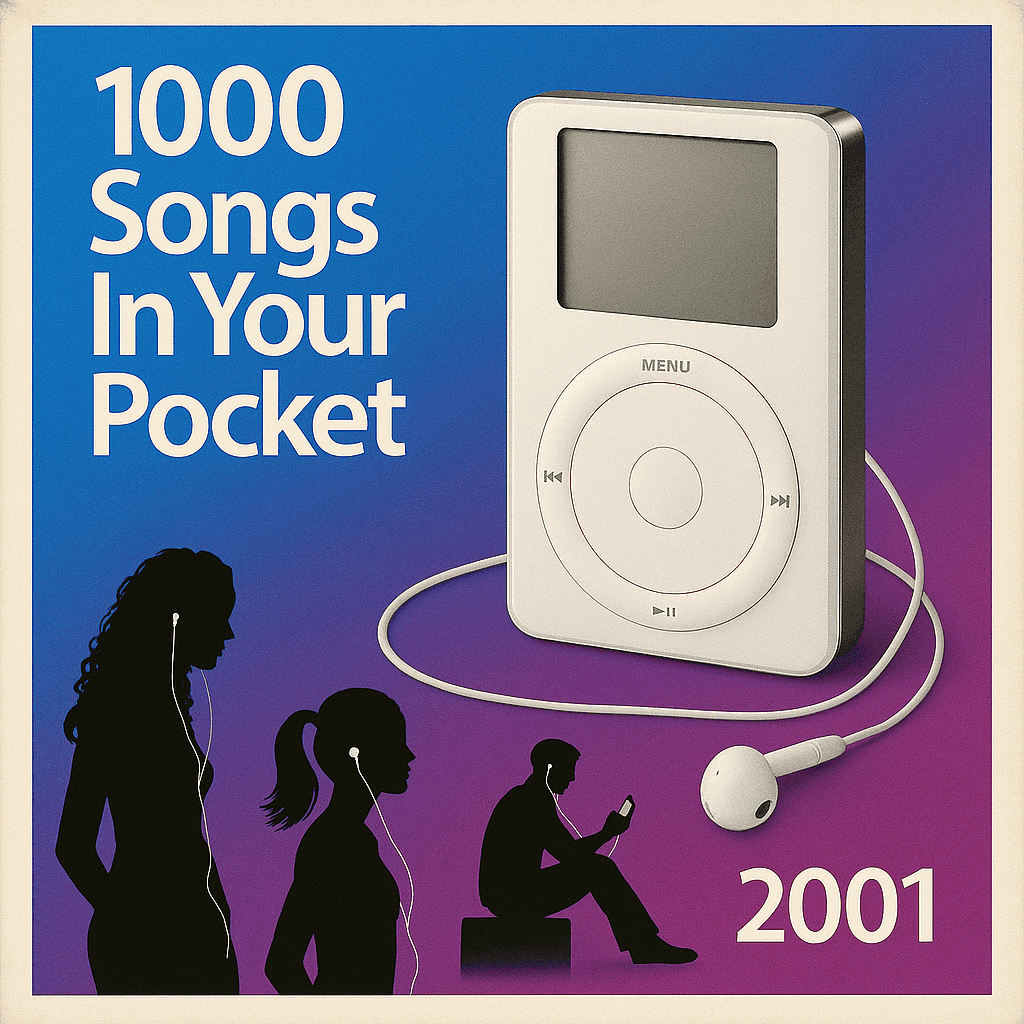
On October 23, 2001, Apple Inc. unveiled the iPod, a revolutionary portable media player that would fundamentally transform how people consumed, stored, and thought about music. Introduced at a special event at Apple's Cupertino headquarters, the first-generation iPod featured a 5GB hard drive capable of storing approximately 1,000 songs, a sleek white design with signature click wheel navigation, and seamless integration with Apple's iTunes software. The device's tagline "1,000 songs in your pocket" captured both its technical capability and cultural promise, offering music lovers unprecedented portability and storage capacity that rendered traditional CD players and even early MP3 players obsolete.
This iconic device would rescue Apple from near-bankruptcy, establish new paradigms for digital music consumption, and create the foundation for the company's transformation into the world's most valuable technology company.
Birth of a Game-Changer
The iPod emerged from Apple's recognition that existing MP3 players suffered from poor design, limited storage, and complicated user interfaces that frustrated consumers seeking digital music solutions. Under the leadership of CEO Steve Jobs, Apple's engineering teams combined cutting-edge hard drive technology from Toshiba with elegant industrial design and intuitive software to create a product that prioritized user experience over technical specifications. The iconic click wheel, designed by Apple's Phil Schiller, provided effortless navigation through large music libraries, eliminating the frustrating button-pushing that characterized competing devices.
The iPod's development represented a calculated risk for Apple, which had focused primarily on computers and was entering the consumer electronics market at a time when the company's survival remained uncertain. Jobs understood that success required not just superior hardware, but an integrated ecosystem that made acquiring, organizing, and playing digital music as simple as possible. This insight led to the development of the iTunes Store, launched in 2003, which provided legal, easy access to digital music that complemented the iPod's technical capabilities.
Cultural Phenomenon and Industry Disruption
The iPod quickly transcended its status as mere electronic device to become a cultural icon and fashion statement, with its distinctive white earbuds becoming instantly recognizable symbols of digital music consumption. Apple's marketing emphasized the iPod's role in personal identity and lifestyle, using silhouette advertisements that made the device itself the star while suggesting that music was an essential component of modern life. This approach attracted consumers who might have been intimidated by technology but recognized the iPod as both functional tool and status symbol.
The device's impact on the music industry proved profound and irreversible, accelerating the shift from physical media to digital distribution that had begun with file-sharing services like Napster. The iTunes Store provided record labels with a legal alternative to piracy while giving consumers convenient access to individual songs rather than forcing them to purchase entire albums. This transformation empowered listeners while disrupting traditional music industry business models, ultimately changing how artists released music and how consumers discovered new sounds.
Foundation for Apple's Digital Empire

The iPod's overwhelming success established Apple as a leader in consumer electronics and validated the company's strategy of creating integrated hardware, software, and services ecosystems. Revenue from iPod sales provided the financial stability that enabled Apple to develop the iPhone, iPad, and other revolutionary products that would define 21st-century technology. The device demonstrated that superior design and user experience could command premium prices and generate customer loyalty that transcended typical brand relationships.
The iPod's legacy extends far beyond its direct impact on music consumption to influence how people think about portable electronics, digital media, and the role of design in technology products. While streaming services and smartphones eventually rendered standalone music players obsolete, the iPod established principles of elegant design, intuitive interfaces, and ecosystem integration that continue to guide technology development today. The device transformed Apple from a struggling computer company into a cultural force that shapes how billions of people interact with technology, communicate, and consume entertainment.