


On August 12, 1985, Japan Air Lines Flight 123, a Boeing 747SR carrying 524 passengers and crew, crashed into Mount Otsuka approximately 70 miles northwest of Tokyo, becoming the deadliest single-aircraft disaster in aviation history. The tragedy began at 6:24 PM, just twelve minutes after takeoff from Tokyo's Haneda Airport, when a catastrophic structural failure in the aircraft's rear pressure bulkhead triggered a chain of events that would doom the flight. Despite the heroic efforts of Captain Masami Takahama and his crew to maintain control for 32 agonizing minutes, the aircraft ultimately crashed into the mountainous terrain at 6:56 PM, killing 520 of the 524 people aboard.
The disaster shocked Japan and the international aviation community, not only because of the massive loss of life but also because of the prolonged struggle for survival that passengers and crew endured as the crippled aircraft flew uncontrolled through Japanese airspace. The crash would lead to significant changes in aircraft design, maintenance procedures, and emergency response protocols worldwide.

A Flight Doomed by Metal Fatigue
Flight 123's fate was sealed by a maintenance error that had occurred seven years earlier. In 1978, the aircraft had suffered a tailstrike during landing, damaging the rear pressure bulkhead. Boeing's repair involved installing a splice plate, but the work was performed incorrectly, using a single row of rivets instead of the required double row. This faulty repair created a weak point that gradually deteriorated through repeated pressurization cycles over thousands of flights.
When the bulkhead finally failed at 24,000 feet, it created explosive decompression that severed all four hydraulic systems controlling the aircraft's flight surfaces. The escaping pressurized air also blew out a large section of the vertical stabilizer, making the aircraft nearly impossible to control.
Thirty-Two Minutes of Terror
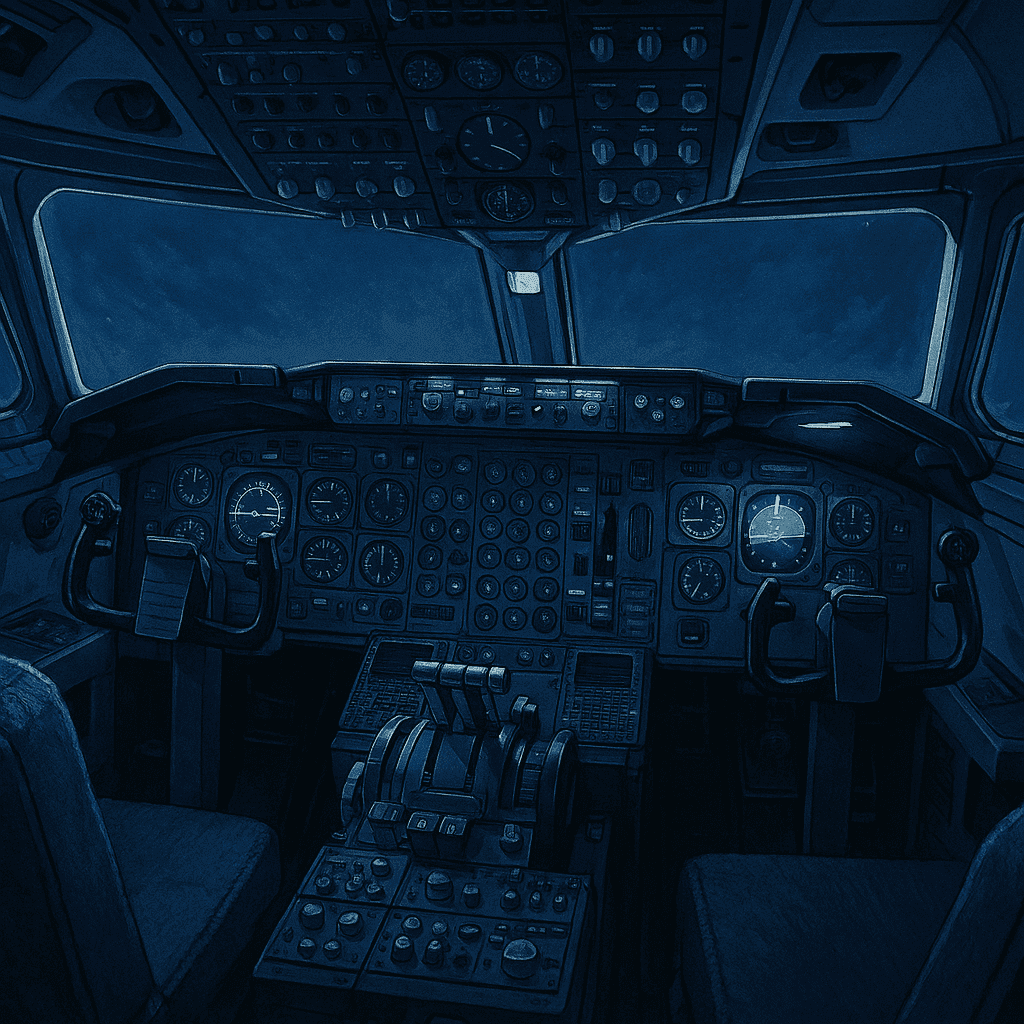
The crew's struggle to control Flight 123 became one of aviation's most harrowing examples of pilot skill and determination under impossible circumstances. With no conventional flight controls, Captain Takahama and First Officer Yutaka Sasaki attempted to use differential engine thrust to steer the aircraft, while Flight Engineer Hiroshi Fukuda worked desperately to find any system that might help them land safely.
A Nation in Mourning
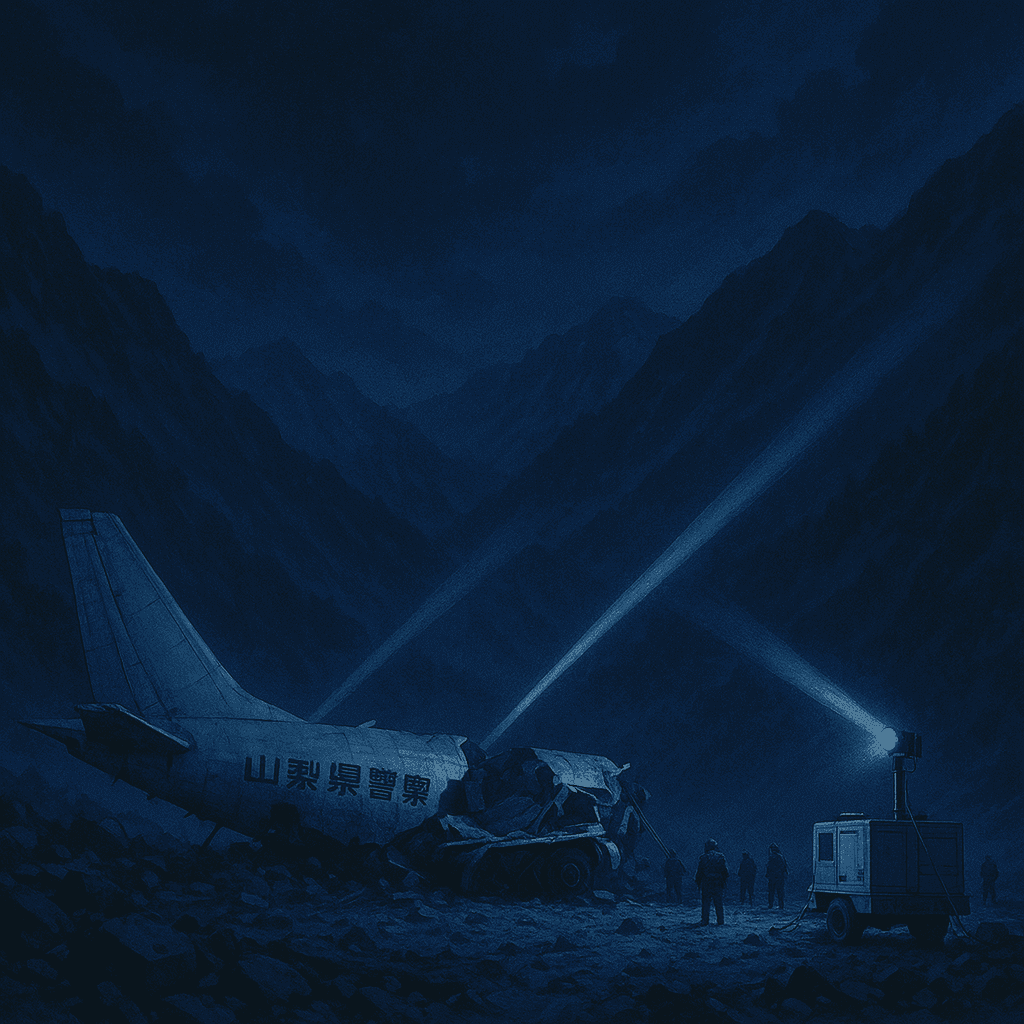
The crash site's remote location in the Japanese Alps delayed rescue efforts for over 12 hours, contributing to the death toll. Among the 520 victims were prominent business leaders, celebrities, and entire families, making the disaster a national tragedy that touched every corner of Japanese society. Only four passengers—all women and children seated in the aircraft's tail section—survived the impact and the night in the mountains. The investigation revealed the maintenance error and led to sweeping changes in aircraft inspection procedures, structural repair protocols, and crew training for hydraulic failure emergencies.